The Basics of Fisheries Management
Why are fisheries managed?
Marine resources belong equally to all citizens. They are a public trust resource like navigable waterways, beaches, and wildlife. Governments are trusted to manage these resources for the benefit of current citizens and future generations. The main management goals are to:
-
Over 80% of Americans eat seafood, consuming roughly 19.1 pounds per person annually. Protecting the domestic seafood supply is important to ensure food security and maintain safety standards.
-
Managing fisheries creates economic stability by:
Avoiding fishery collapses that cause sudden industry crashes
Ensuring availability of sustainable seafood that has higher market value
Securing access to global seafood markets
-
Marine ecosystems produce over half of the planet’s oxygen, regulate climate, absorb over 90% of excess global heat, and trap roughly 30% of carbon dioxide emissions.
Where are fisheries managed?
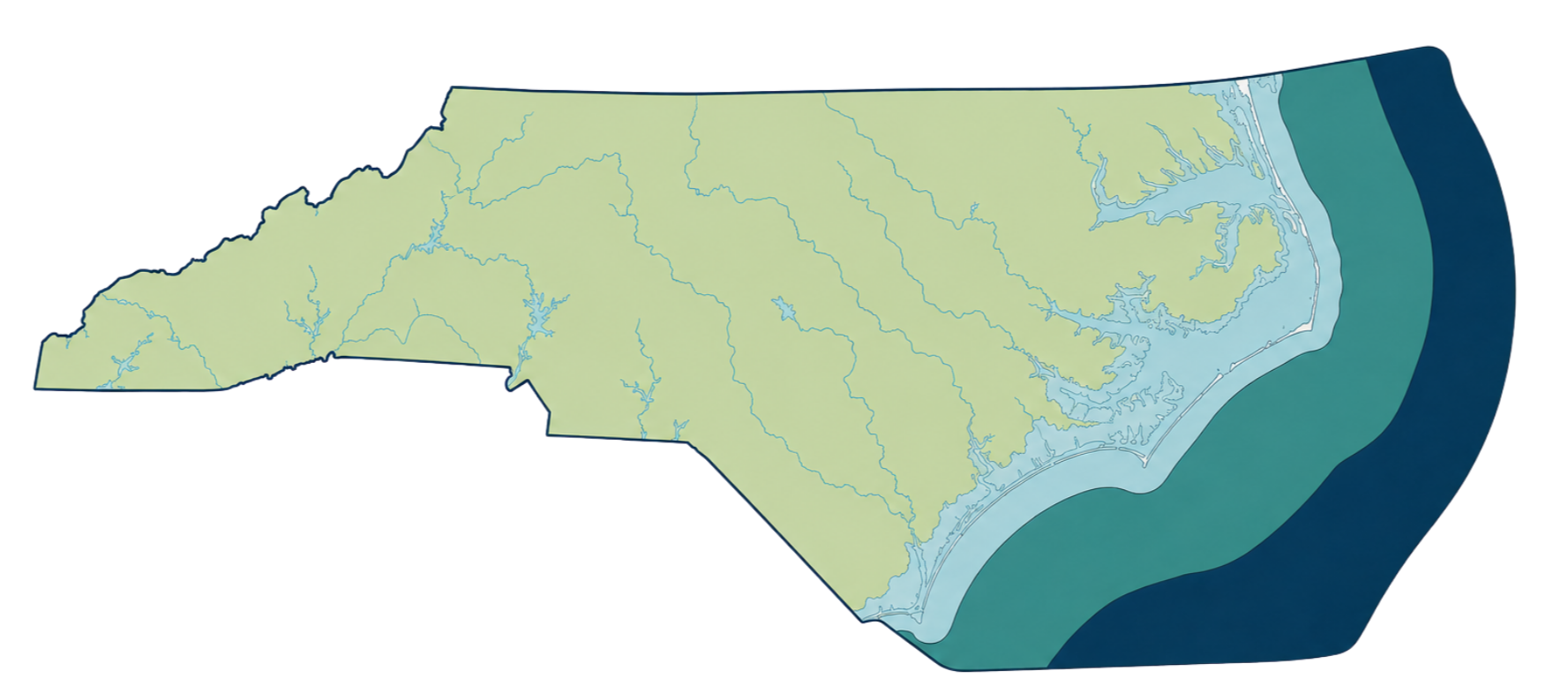
Fisheries are managed all over the world by different levels of government. The territories are usually defined by their distance from shore.
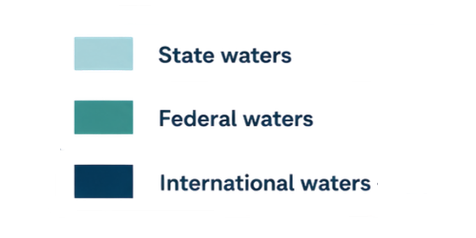
International waters: 200+ nautical miles offshore
Federal waters: 3-200 nautical miles offshore
State waters: 0-3 nautical miles offshore
NC joint fishing waters: areas where salt and fresh waters mix
Who manages fisheries in North Carolina?
State


Federal
Interstate